Katja Hoffmann · 24 October 2026
Reclaimed Timber from Historic Tree Species Powers Sustainable Restorations in Building Projects Worldwide
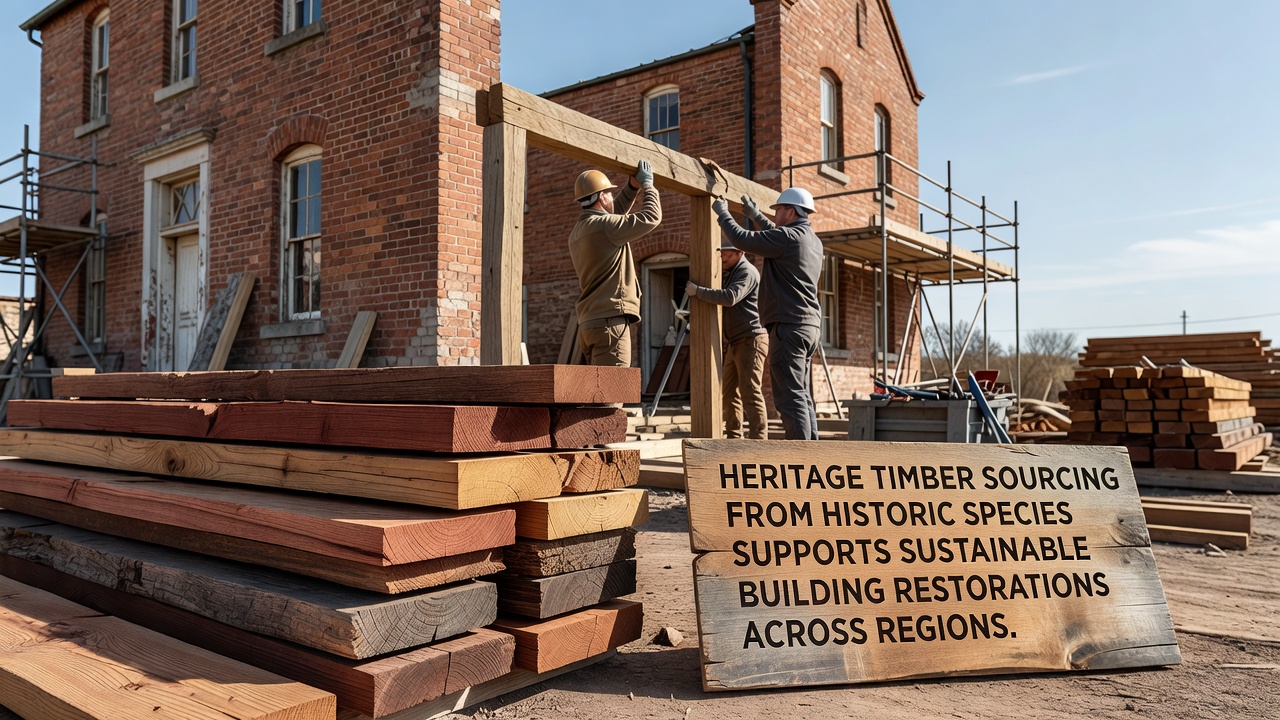
Reclaimed timber sourced from historic tree species has gained traction in restoration projects because it supplies durable materials while reducing demand for newly harvested wood, and experts note that species such as oak, chestnut, and pine from old structures often exhibit superior strength after centuries of seasoning. Data from regional forestry agencies shows that these materials frequently match or exceed modern lumber in load-bearing capacity, which allows builders to maintain structural integrity during repairs to heritage buildings across North America, Europe, and Australia.
Supply Chains and Regional Practices
Supply chains for heritage timber typically begin with deconstruction of barns, mills, and warehouses slated for demolition, and crews document the species, age, and dimensions before transporting the wood to certified mills for cleaning and grading. In October 2026 the Canadian Wood Council published updated guidelines that standardize grading protocols for reclaimed beams, and these protocols help contractors verify that the timber meets current building codes without requiring chemical treatments. Observers note that projects in the Pacific Northwest have paired reclaimed Douglas fir with local restoration efforts, while crews in the southeastern United States have used longleaf pine recovered from nineteenth-century warehouses to repair coastal fortifications.
European programs follow similar patterns yet operate under different regulatory frameworks, and the European Environment Agency tracks volumes of reclaimed hardwood entering the market each year. Figures reveal that France and Germany together account for a substantial share of chestnut and oak recovered from industrial sites, and builders there integrate the wood into both residential and public building restorations. Australian suppliers have developed parallel systems focused on jarrah and blackbutt recovered from early twentieth-century infrastructure, which supports projects that must comply with national sustainability targets.
Environmental Metrics and Certification
Life-cycle assessments conducted by university research teams indicate that using reclaimed timber lowers embodied carbon compared with virgin lumber, and the difference stems from avoided harvesting emissions plus the energy already invested in original milling. Certification bodies such as the Forest Stewardship Council have expanded their chain-of-custody standards to cover reclaimed material, which gives project managers verifiable documentation for green building rating systems. One study released by Oregon State University in 2025 tracked five restoration sites and found that each avoided between 40 and 70 metric tons of carbon dioxide emissions by substituting heritage timber for new stock.
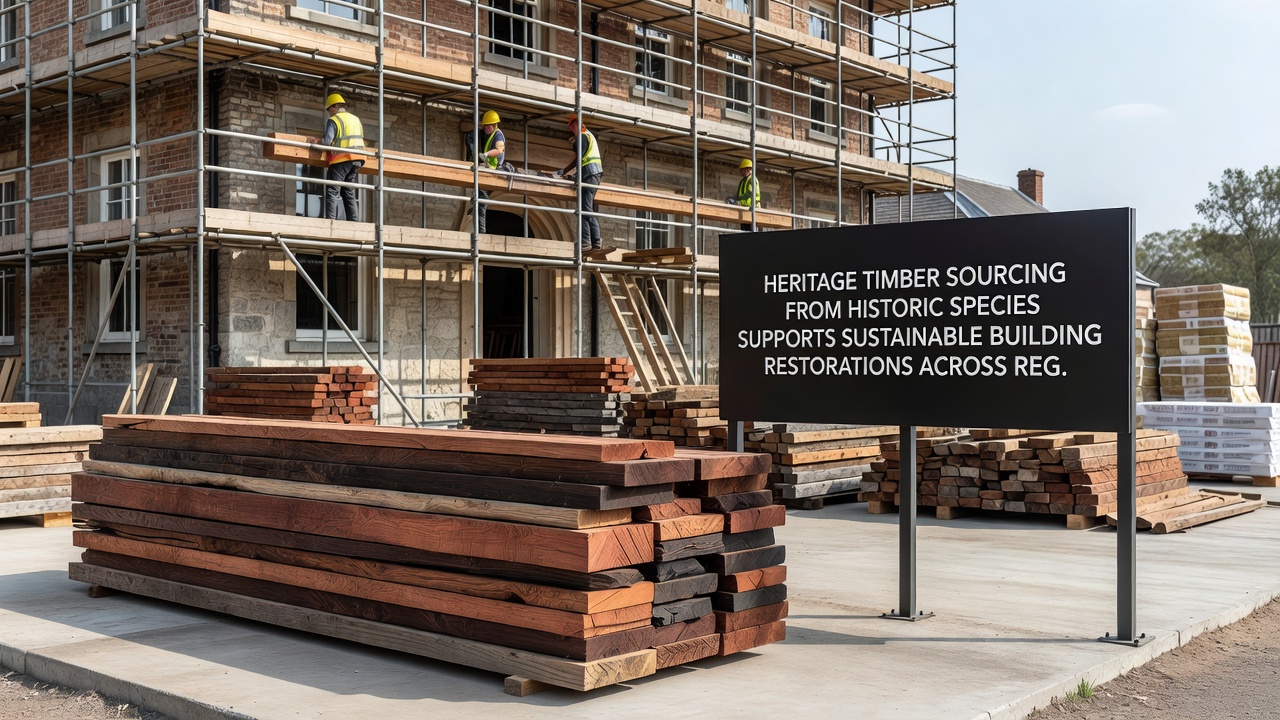
Market data compiled by industry associations further shows steady growth in demand for certified reclaimed wood, and this growth coincides with stricter limits on old-growth harvesting in several jurisdictions. Builders report that the distinctive patina and tight grain patterns of heritage timber also satisfy aesthetic requirements for period-accurate restorations, which reduces the need for artificial aging techniques. Yet supply remains constrained by the finite number of qualifying structures, so planners increasingly combine reclaimed stock with fast-grown plantation wood to balance cost and availability.
Case Examples from Multiple Continents
Restoration of a nineteenth-century lighthouse in Nova Scotia incorporated beams salvaged from a nearby shipyard, and engineers confirmed that the reclaimed timber met modern seismic requirements after minimal reinforcement. In the United Kingdom, crews restoring a Georgian-era mill used oak recovered from redundant railway sleepers, while parallel work in Victoria, Australia, paired reclaimed jarrah with new plantation eucalyptus to meet both heritage guidelines and contemporary fire standards. These projects demonstrate that regional sourcing networks can adapt to local species and regulatory environments without compromising performance.
Training programs run by trade organizations now include modules on identifying historic species and assessing moisture content in reclaimed stock, and graduates have applied these skills on sites ranging from urban warehouses to rural churches. Collaboration between architects, structural engineers, and timber graders has produced standardized specifications that appear in tender documents for public projects, which streamlines procurement and reduces delays.
Conclusion
Heritage timber sourcing continues to expand because it aligns material performance with environmental goals, and the practice draws on established deconstruction techniques paired with updated certification systems. Regional differences in species availability and building traditions shape how crews apply the approach, yet the core principle remains consistent across continents. Continued documentation of performance data and supply volumes will determine how widely the method scales in coming years.